


Hidden doors: 5 myths and truths
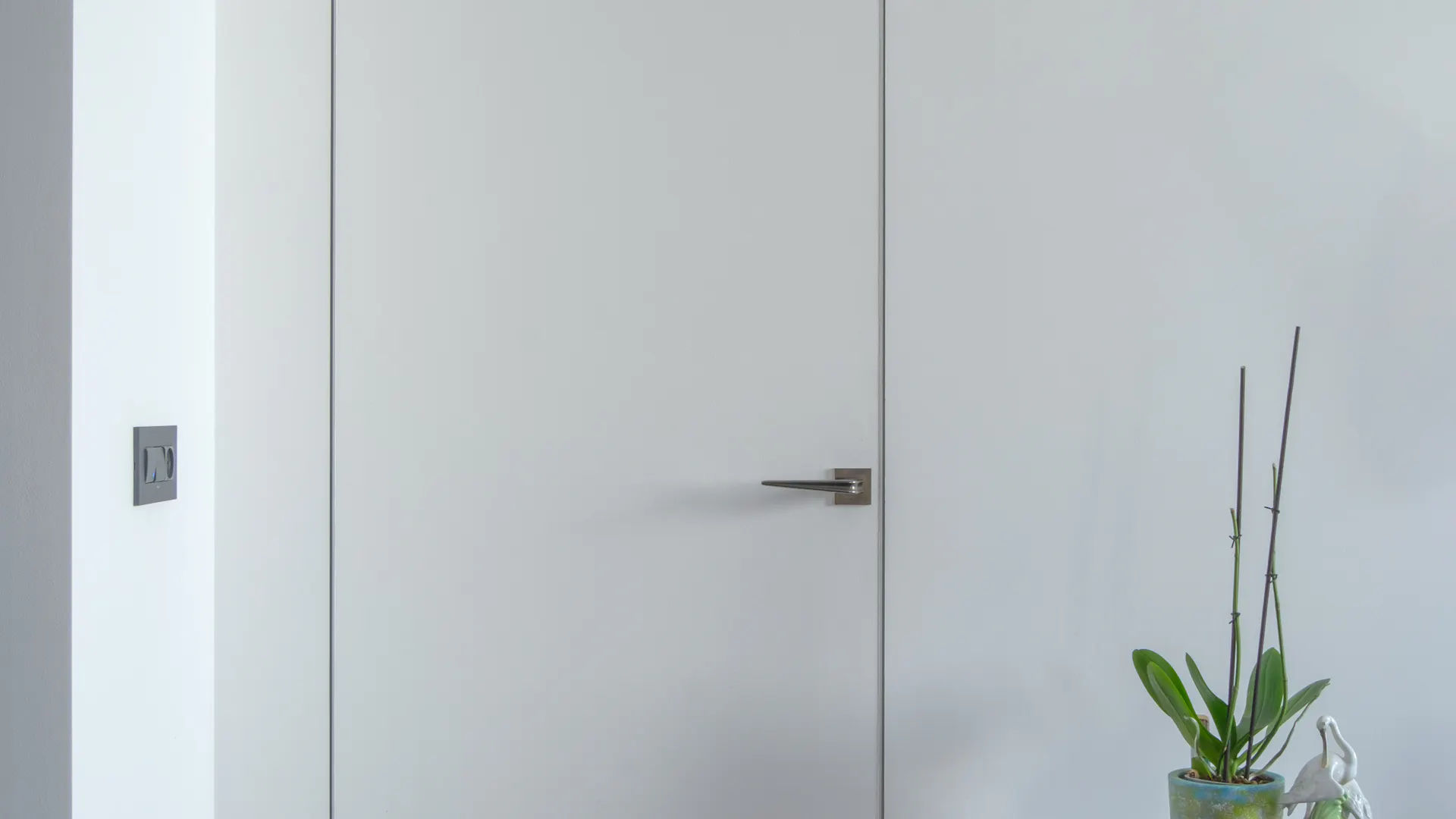
Hidden doors are one of the most asked-about elements of a modern interior, and plenty of misconceptions have grown up around them. Kamran Mammadov of Open Systems put the five we hear most often to the test: three are myths, two are true.
1. “A hidden door should be completely invisible.” — Myth
A hidden door isn't an invisible door; it's a concealed installation. What defines it is that the frame and the hinges can't be seen. The frame sits inside the wall, the hinges are concealed within the door, and the leaf lies flush with the wall surface.
A fine outline of the door may still show, and that's expected. Expect a clean, quiet line, not a disappearing act.
2. “A door with a handle isn't a hidden door.” — Myth
A well-chosen handle makes the door look better. A slim, minimal handle, or one in the same tone as the wall, doesn't break the hidden-door look; it adds a subtle accent.
The door can also go without a handle, for example with a push-to-open mechanism. That brings some limitations, though: you need something to grip on the pull side, and because the surface gets touched often, a light painted leaf can show marks. It's best to settle which option suits you at the design stage.
3. “Hidden doors make a room look bigger.” — True
With no doors on show, walls read as continuous surfaces and the space feels larger. The effect is strongest in corridors with several doors and in small hallways, and floor-to-ceiling doors make it stronger still.
4. “The door finish must match the wall finish.” — Myth
Matching the door to the wall is simply the most popular choice, not a rule. A hidden door can be finished in paint, mirror, veneer, stone, fabric, leather or metal. It keeps the clean line of a concealed installation while becoming a deliberate accent on the wall.
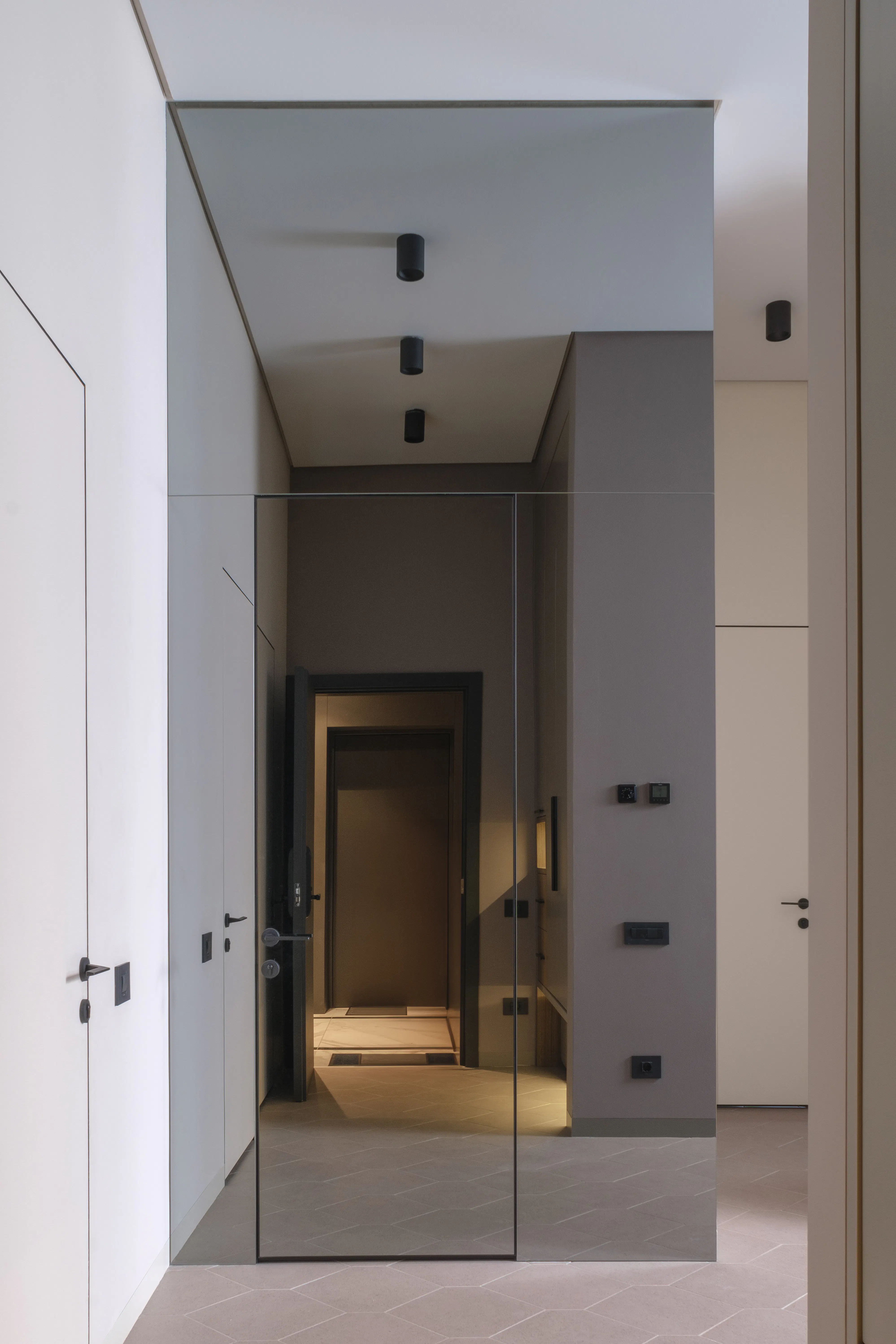
5. “You have to decide on hidden doors at the start of a renovation.” — True
People who leave this decision until the end usually face extra costs and lost time. The reason is simple: the concealed frame goes in before the wall work is finished, so wall thickness, floor level and door height must be known in advance. Decide early and you save both time and budget.
Decide before the renovation starts
- Which rooms get hidden doors, and which way each one opens
- Door height: standard or floor-to-ceiling
- With a handle or without
- Finish: matched to the wall or an accent material
- Wall type: brick, concrete or plasterboard
Watch Kamran's answers in the short video on our Instagram.
See hidden doors in person
Visit the Open Systems showroom at 21 Central Boulevard Street, White City, Baku. Browse every model in our Doors collection.